
Lindblom Park
6054 S Damen Ave, Chicago, IL, 60636
M-F: 9am - 8pm.
Sat & Sun: 9am- 4pm
Installations
✳︎
Descriptions
✳︎
How to play
✳︎
Installations ✳︎ Descriptions ✳︎ How to play ✳︎
Primary
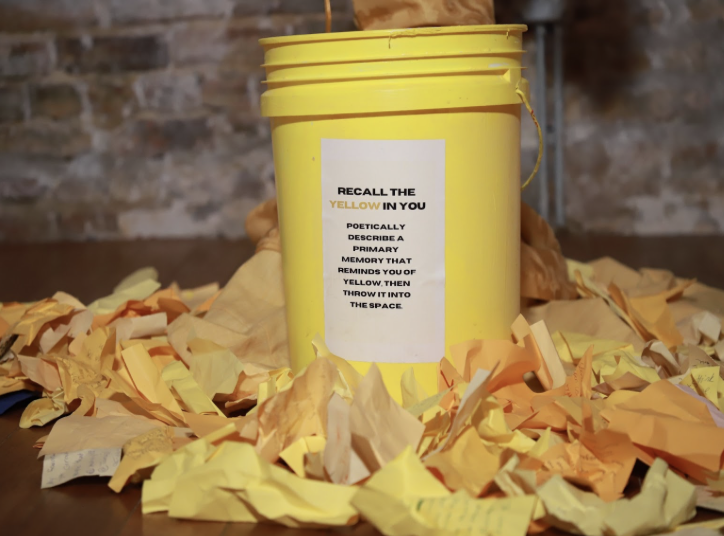
How to play: Grab a piece of paper from the colored bucket of your choice and write a prose poem in response to the prompt on the respective bucket. Once the poem is written, crumple the paper and throw your poem into the space, contributing to the chaotic masterpiece that is Primary.
Poetic Element: Free Write: Freewriting is a writing technique where you write continuously without editing, or worrying about grammar, spelling, or structure.
Description: Standing confidently and statuesque, the PRIMARY MANNIQUINES call on their audience to participate in their own poetic self portrait. Pulling from classical draped statues of the greeks and contemporary Louis Vuitton Mannequens by Virgil Abloh, the installation stylishly explores the process of using memory as a navigating tool towards self enlightenment and liberation. How do the primary moments of our life inform who we are to become? What happens when you gain true agency and accountability over the life you seek to create? PRIMARY offers audiences not just art, but recognition—a mirror for interior states often left unnamed. It is an immersive and fashionable exploration of becoming. May you call on your Primary memories and investigate who you once were, in order to decide who you will become.
By Sejahari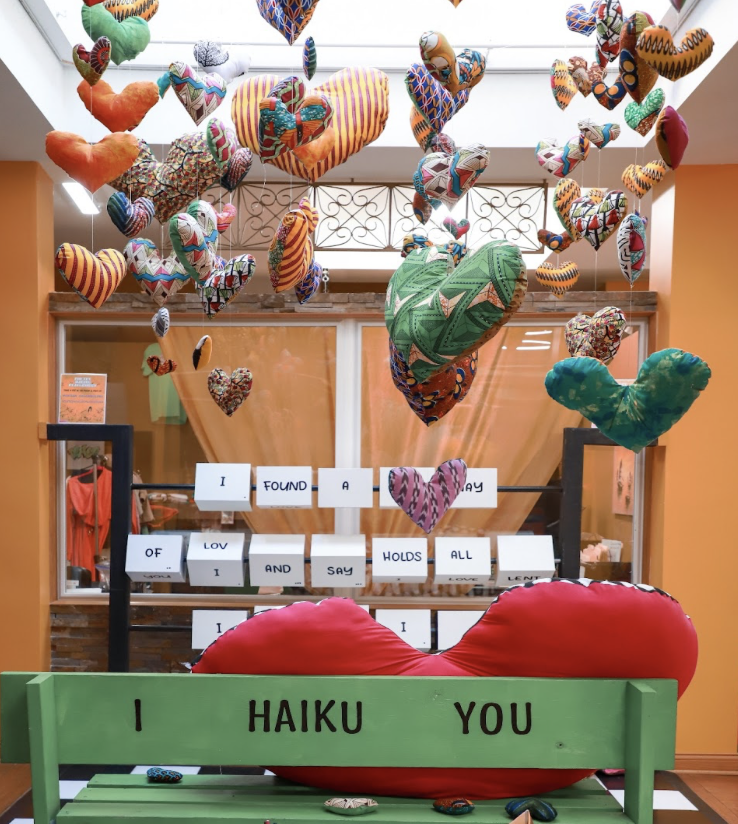
I Haiku You
How to play: Select from Liza’s Haiku’s that are written on the four sided abacus, create your own Haiku using the provided syllables and blank spaces.
Poetic element: A haiku is 17 syllables across 3 lines - 5 syllables/ 7 syllables/5 syllables
Description: I haiku you is an interactive life-size double-sided word abacus that centers on haiku form poetry as a means of expressing and experiencing joy and liberation. This installation serves as a means to access play and wonder while calling in new language to reconcile the journey. Liza explores ways to incorporate sound and storytelling while drawing the connection to our inherent wisdom and healing.
By Liza Garza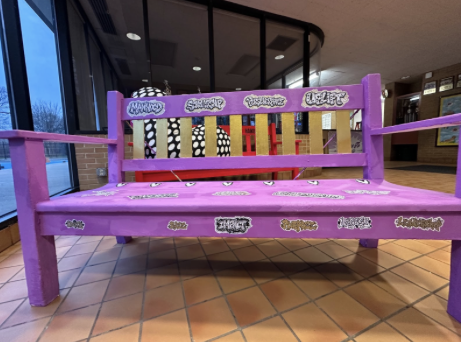
Poems in Cue
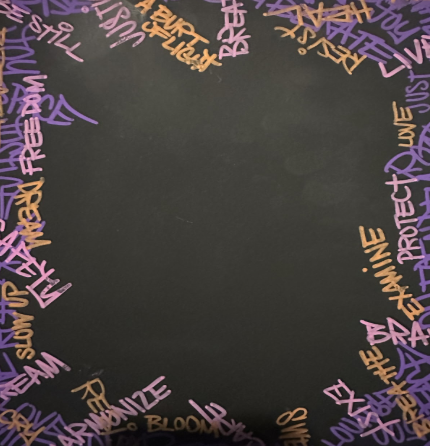
By Kuumba LynxHow to play: Sit. Read. Reflect. Write. Let the bench stimulate your heart. What do the words and phrases make you think about? Choose one of the words or phrases to respond to. Using the heart shaped cards, write your response in the form of a Remix Etheree Poem.
Poetic Structure: A Remix Etheree (et-eer-ree) is a 10-line socially reflective poem. It starts with a 10 syllable line and ends with one syllable. Each line decreases by one more syllable than the last.
Description: The Poems in Cue bench was inspired by Lindblom Park’s supervisor, Coffie, celebrating the principles of Omega Psi Phi Fraternity, INC. Reminding us that The Most Loving, are those who put LOVE In Action. The purple royalty color palette is accompanied by Black outlined words likened to the Que Dawgs four principles to uplift, persevere, commit to scholarship and maintain brotherhood.
Poison Shawty
By Kuumba LynxHow to Play: Grab a hula hoop, bubbles, or Skip It. Be sure to return! Then Use magnets and chalk to build your own poem on the walls. Rearrange, disrupt, and rewrite. You can also write or draw on the small chalkboards in the baskets , or on the large one. When you are done, take a mini chalkboard off one of the hooks+write a unique affirmation then hang it somewhere in your neighborhood ( a tree, doorknob)
Poetic Form: Collective Affirmation Poems celebrate shared voices and experiences. They center reflection on community, identity, and resilience.
Description: Names like Ramirez, Garcia, Jackson, and Jones appear throughout the exhibit, reminding us that while our names differ, we share histories, struggles, and possibilities. Colorful walls, mirrored textures, and lights all under two childlike figures floating in a cosmic skyline, watching, dreaming, becoming.reflecting our interconnectedness and reminding us of our beginnings. Inspired by the poem entitled Poison Shawtys, this space explores how we navigate and resist systems of inequity. While there is an attempt to divide and define us, this space invites us to engage in radical play for connection, solidarity, and our power in simply being. Magnetic & chalkboards walls, mirrors, a few toys & handheld chalkboards with prompts create a canvas for building, remixing, and embodying. Words from the original poem are magnets you can use for reconstructing language & to reclaim narrative. You can write, draw, and respond freely across surfaces. At the center: “When you rise, we awaken. When we awaken, you rise.” A reminder that none of us rise alone.
People Power
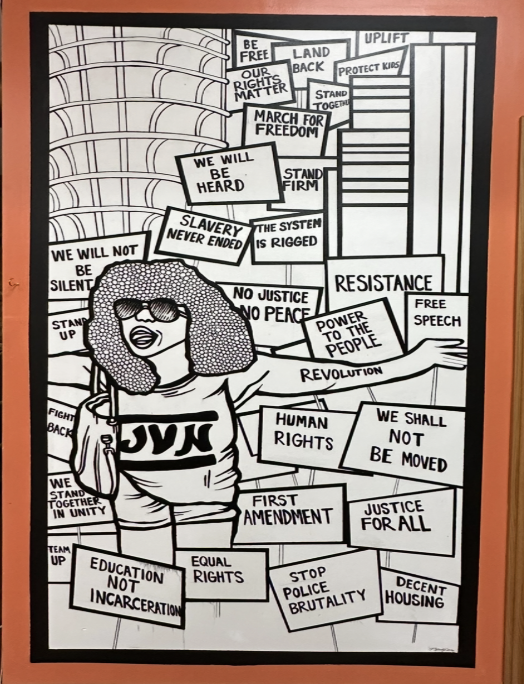
By Kuumba Lynx + Poppin Chuck + Monica TrinidadHow to Play: Choose an empty paper fist hanging on a hook inside the mural. Use a provided marker to write your own protest prose on the fist then hang it on one of the hooks.
Poetic Form: Protest Prose- Uses free form writing to call us in on injustices, raises awareness, challenges power structures, and seeks to unite people against oppression.
Description: This black-and-white mural merges images from local and national protests, specifically those lead by Chicago's #LetUsBreathe Collective, who formed in response to the 2014 murder of Michael Brown in Ferguson. What began as artists and educators supporting protests grew into a movement rooted in community organizing and liberation. In November ‘15, Chicago activists famously organized a major Black Friday protest that shut down the Magnificent Mile blocking store entrances and stopping traffic to protest the killing of 17-year-old Laquan McDonald. In ‘16, the collective launched Freedom Square, a 41-day protest encampment in North Lawndale opposing Homan Square, a site of police abuse. It became a space for care and resistance, offering free resources, and support for the community. Members of Kuumba Lynx traveled to Fergusen, marched that November, and frequented the Freedom Square occupation, performing, facilitating arts based healing activities, preparing meals, and participating in popular education workshops. This mural reflects the power of protest, creativity, and collective action in Chicago’s ongoing demands for justice.
MoKnows #HOP(E)SEARCH
By Mobolaji Akintunde IG: @mobillionaireHow to Play: As participants hop forward, they physically move through the phrase: May each hop add (e)ase to your search for HOPE. Adjacent to the path, a word search invites participants to literally search for each word they hop on, reinforcing the idea that hope is something we actively seek, notice, and assemble from small (mo)ments.
Description: #HOP(E)SEARCH part of the PMP TRAIL Hop Scotch series that transform a familiar childhood game into an interactive installation, #HOP(E) Search invites people to move, reflect, and make room for hope through play and discovery. Each square and half circle holds a word from Mobolaji’s ten-part wisdom. The work plays on the idea that hope is only one “e” away from hop, a metaphor for how small acts of “ease”, joy, and play can transform our “experience”, particularly in times of social unrest and uncertainty. At the destination, HOPE is framed as both an arrival and an invitation to: Hop On & Play Endlessly. The installation positions play and joy as acts of resistance and ways of reclaiming space and collective possibility.
Life is Living
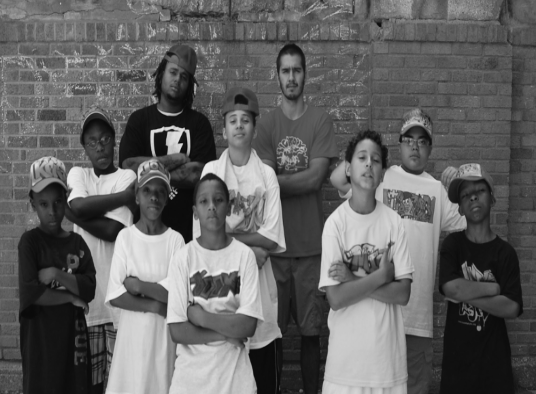
By Chicago Graffiti LegendsPoetic Element: Layered Poem (Repetition, Imagery, Metaphor)
How to Play: Walk along the canvases and pause at each one. Begin with a quick “tag” line—a short phrase like “I am…” or “Life is…”. At the next canvas, write a bold “throw-up” line reacting to what you see or feel. As you continue, start to “fill” your poem with more detail—add imagery, emotion, or metaphor. Let each canvas inspire one new line. By the final canvas, create your “piece” (burner) by putting your lines together into a complete poem. You can rearrange them, repeat a line, or add a final thought. Move at your own pace and let the walls guide your words.
Description: Check out all the canvases 30th Anniversary ArchivesAs you move through this space, you are stepping into the Kuumba Lynx 30th Anniversary Archives, celebrating decades of partnership with the Chicago Park District and a legacy of free, all-ages arts programming across the city. These canvases come from the Hip Hop Arena Graffiti Exhibitions (circa 2009, Clarendon Park) and reflect creativity, collaboration, and community in Chicago’s public spaces. As you explore, you’re invited to create your own poem in response. In graffiti, a tag is a quick signature, a throw-up is bold and fast, a fill adds color and depth, and a piece (burner) is a fully developed work. You’ll move through these same stages—starting small and building as you go. Let each canvas guide your words as you create something of your own, inspired by the energy, history, and spirit of this space.